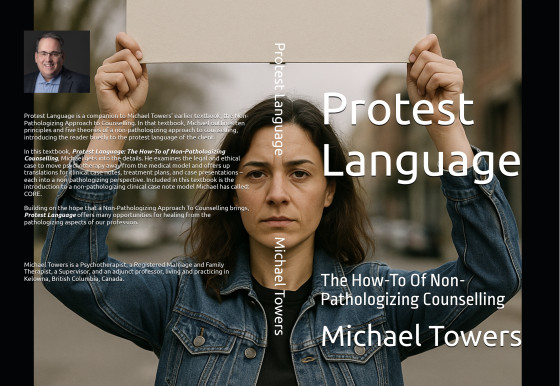
Protest Language: How a Non-Pathologizing Approach to Counselling Works
Published August 8, 2025
New textbook, published 2025. Preaccredited through CCPA for 8 CECs.
Books, articles, and audiobooks on the non-pathologizing approach to psychotherapy.
Books
Published August 8, 2025
New textbook, published 2025. Preaccredited through CCPA for 8 CECs.
Published October 5, 2023
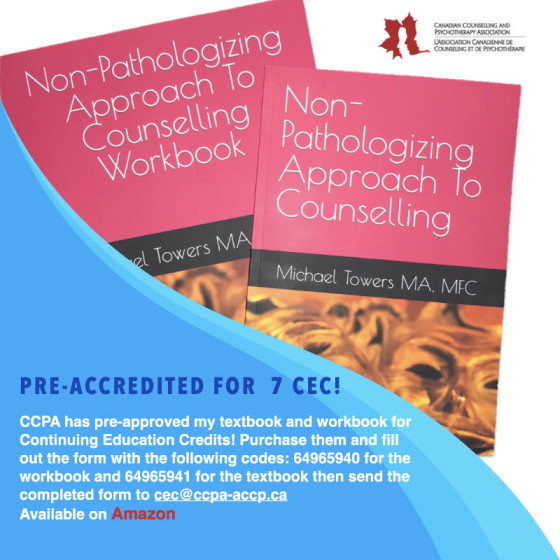
The foundational textbook of Michael's non-pathologizing approach to counselling.
The audiobook is also available on Kobo and NOOK Audiobooks.
Published October 5, 2023
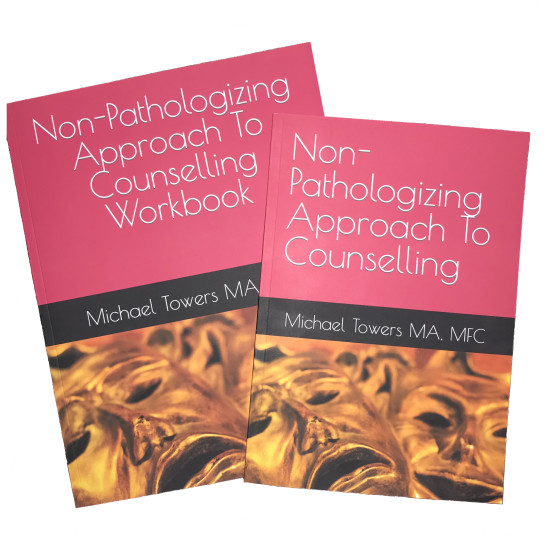
The companion workbook to the Non-Pathologizing Approach to Counselling textbook.
Articles
August 16, 2026
Shame frequently appears in clinical work as a pervasive, immobilizing experience that persuades clients that they themselves are the problem. For counsellors committed to non pathologizing, collaborative practice, a central challenge is how to address shame without reinforcing deficit based understandings of self. Drawing from Non-Pathologizing practices and a collaboratively developed metaphor with a client (“EL”), this article frames shame as a product of system rules and power relations, rather than an internal flaw. EL’s imagery of mines, C4, and grenades offers a practical, accessible map for helping clients identify, contest, and re author the rules that authorize shame. Clinical implications for counsellors include strengthening differentiation, supporting client generated rule sets, and co constructing metaphors that honour clients’ language and lived contexts.

August 13, 2026
One of the most insidious expectations is the tacit injunction not to question at all: Why are these boundaries or behavioural standards imposed in the first place? A full exploration would require engaging deeply with patriarchal structures, colonial legacies, and other systems of domination. A recurring conclusion, however, is that we are discouraged from asking precisely because the question itself disrupts those systems: “Because we aren’t allowed to ask.”
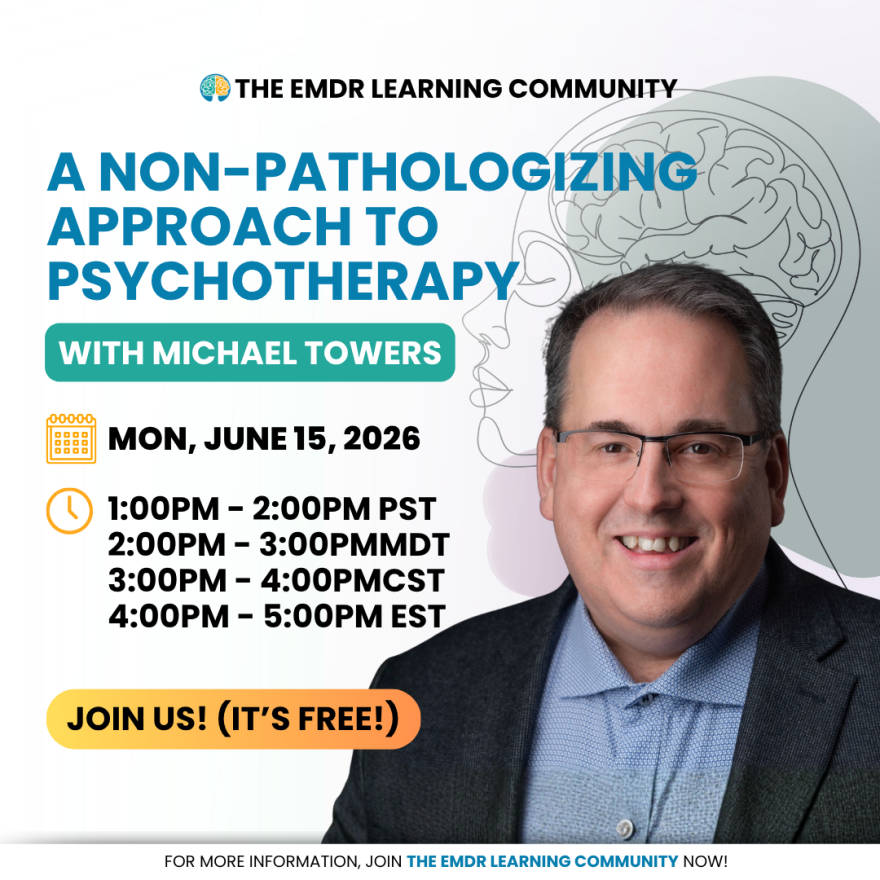
June 23, 2026
What if we approached psychotherapy without pathologizing our clients? If you have ever asked yourself how we can approach psychotherapy without pathologizing our clients, come and join us for a discussion on “A Non-Pathologizing Approach to Psychotherapy” with Michael Towers, a certified clinical supervisor and psychotherapist based in BC’s Okanagan valley. In this webinar, Michael accompanied by Oraine Ramoo talks about what non-pathology truly means and why it is deeply needed in the mental health field today. Viewers will learn about the rich history of non-pathology in psychotherapy and gain practical insights on how to successfully translate various therapeutic modalities into a non-pathologizing framework to better support their clients. Whether you are a seasoned practitioner or a student, Michael’s expertise—drawn from his extensive teaching and published textbooks like "Protest Language" and "Non-Pathologizing Approach To Counselling"—offers an invaluable perspective that will enrich your clinical practice. Settle in, hit play, and discover a more empowering and compassionate way to guide the therapeutic journey.
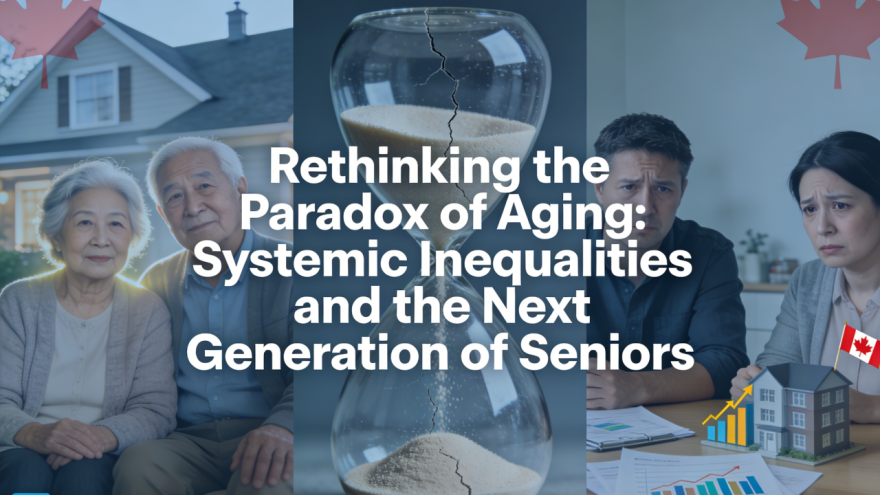
March 15, 2026
We are often told there is a paradox of aging: that getting older inherently produces happiness because seniors have finally achieved a differentiated state. This article argues otherwise.
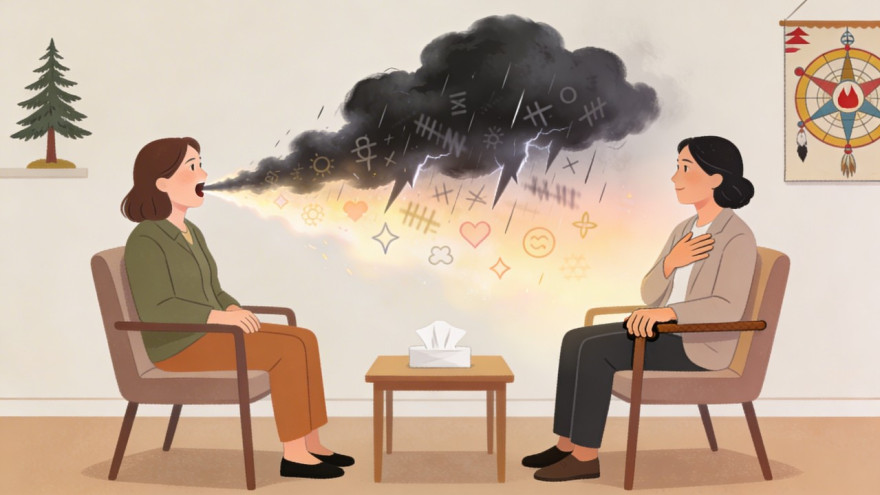
February 15, 2026
When vicarious trauma shows up as hate speech in Canadian counselling rooms, therapists need ways to understand, contain, and transform it without colluding with harm or abandoning the client.

March 7, 2025
This article will set out to untangle lying from its moralistic hold, imposed as, what this author calls, an external identity upon the subject. The author will then introduce the idea of lying being an external control mechanism. The intent is to find distance from the moral implications of lying and instead speak to the application of lying as being an effective way of obtaining a measure of control, which this author asserts is directly related to a need for safety. This removes the moral argument from lying and the subjectivity that comes with it, instead identifying that lying is simply a mechanism that people use to give themselves a measure of control so they can feel safe. It is only when the use of that mechanism becomes disruptive in any of the person’s relationships that it needs to be addressed. Again, not as a moral failing, but as a mechanism that no longer works in helping the person have a measure of control so they can feel safe.

October 6, 2024
This past Friday I travelled a few hundred kilometers to a university campus where one of my professional associations was holding an AGM. The last time I had been to that campus was almost 33 years earlier, to the day. At the time I was a student, albeit for only two weeks, as my student loan was not approved. I had travelled to the university with my girlfriend who was also a student there. Having lost my funding I moved off campus and would come and visit her occasionally. The last evening I showed up on campus, 33 years ago, I was struggling with a compounding set of circumstances.

May 16, 2023
In the beginning of 2020, as we witnessed the world ‘shutting down,’ our lives started to change in profound ways. Streets emptied and hospitals filled up as the pandemic spread. We lost friends and family over the next three years but we also lost much more. We lost a sense of our identity. We lost who we were. Forced out of our places of employment. Forced into seclusion. Forced into loneliness we slowly lost our connection to one another. We lost, in essence, what makes us human. As we emerge from the pandemic and the world opens up again, it is only now that we are tending to this social grief and loss, and the reality is that we don’t know how.

February 1, 2023
British Columbia has often been called the ‘Wild West’ of counselling therapy because there is no regulation — on why professional standards matter anyway.
October 7, 2022
When counsellors seek therapy: why more should, but so many hesitate (Originally published in BCACC's Insights Magazine Fall 2022)

March 10, 2022
Hello. My name is Michael Towers of Michael Towers Counselling. I am a counsellor. Or you can call me a therapist. Or how about a clinician? A Counselling Therapist? A Psychotherapist? We can confuse this even more with the letters after my name which allow me legally to call myself a Marriage and Family Therapist or a Registered Clinical Counsellor or a Certified Professional Counsellor. Confused yet? Yeah, so am I.

March 19, 2021
Reflections on moving from a decade of non-profit agency work into building a private practice open to the general public.

March 5, 2020
The last component of this formula is healing. As soon as hope is born, healing can begin. Healing is not the same as behavioural compliance. Healing is not replying, "I'm fine" when someone asks you how you are doing. Healing is not faking it when you go to work or church or some social function just so you can feel like you fit in. Healing is not the same as compliance.

March 4, 2020
The next piece in this formula is hope. The way that I explain this formula up to this point is like this: To begin this process you need to be in control as much as you can and that begins here in this counselling room. You control this room. You control if you want the door open or closed, where you sit, and most importantly you control your stories. Once you feel like you have a measure of control you will begin to feel safe and once you feel safe you will choose to allow yourself to be vulnerable. In your vulnerability, hope is born - and that is where we are right now in this formula - hope.
March 3, 2020
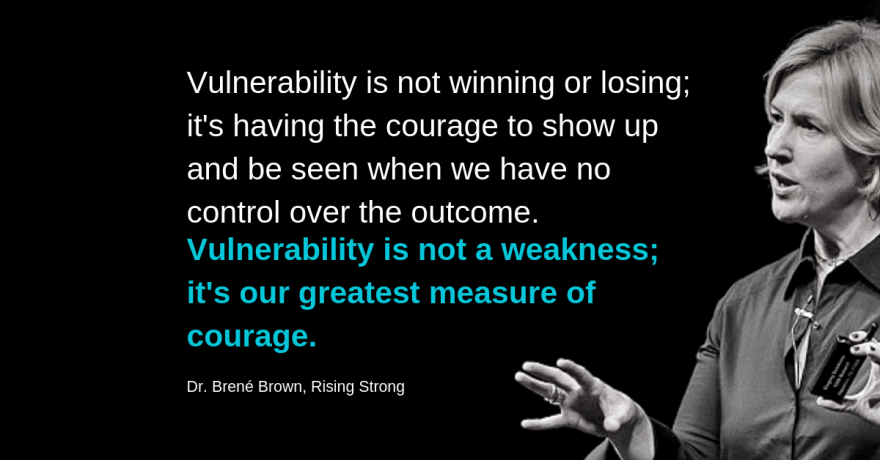
The third part of this formula is vulnerability. My application of this next step has been greatly influenced by Brené Brown's work and research in this field. When I was finishing off my final research piece for my Master's degree I was aware that I was missing a link. I was studying the various aspects of harm in the context of power imbalances - a work I later published under the title, "Experiential Authority" but during the research it was frustrating to me that there was this gap in the middle that I couldn't close. Then I discovered Brené Brown's work and it was simply amazing. I suggest this video (https://embed.ted.com/575095a3-55e3-4ce2-8db7-8724b369c3af) as a place to start in understanding what I am referring to when I talk about vulnerability.
March 1, 2020
The next step in the formula is for the client to come to a point where they feel safe. In the counselling world that most often occurs when a therapeutic alliance has been established. I often take this a step further by providing opportunity for the client to lie to me.

February 29, 2020
For most people taking the step to reach out to a counsellor for help can be a daunting task. Trying to find someone that you connect with is just as challenging and then working hard to maximize the outcome in as short a period of time is almost impossible. All while you continue to pay the hourly fee. It is almost stressful enough to have you forget why you wanted to see a counsellor in the first place! This is why I share this simple formula for a successful outcome with each of my clients: Control + Feeling Safe = Vulnerability which then leads to Hope and finally Healing. The therapeutic process needs to follow this formula. It cannot skip a step or jump ahead in anyway. As an example I never have the expectation that my client is going to be vulnerable with me in that first hour - at least not until the first two parts of the formula have been completed by the client.
August 28, 2024
In the latest installment of Mindful Conversations, Michael Towers, a seasoned psychotherapist with over 15 years of experience, has dedicated his career to redefining the way we approach mental health. "I’ve been practicing here in Kelowna for quite some time," he shares. "Apart from seeing clients, I’m also actively involved in supervising clinicians and practicum students, teaching them how to approach this work from a non-pathologizing perspective."
September 9, 2024
In the third installment of this series, Michael Towers invites us to rethink the idea of boundaries from a non-pathologizing perspective. In therapy, the intervention for “unhealthy boundaries” is often to put the responsibility on the client to somehow convince others that their boundary has value and should be respected. This is often done through emphasizing more assertive ways of communicating.
September 2, 2024
In his latest video, Michael Towers delves into a concept he calls the "Formula for Success," which one of his clients aptly renamed the "Map of Emotional Life." "This is something I introduce to my clients right at the beginning," Towers explains, "It helps orientate them to my philosophy and approach to counseling." This map is designed to guide clients through the complex landscape of their emotions, showing how control and vulnerability play pivotal roles in their healing journey.
September 16, 2024
In the final video of his thought-provoking series, Michael Towers invites us to rethink anger and shame. Starting with Anger, Michael shares the interesting coincidence of the emergence of anger management programs in the 1970s and the civil unrest occurring at the same time. As a reflection of a systemic need to manage, control, and minimize our emotional experiences, a deep pathology emerged regarding emotions and the treatment of them.
Contact
Questions about counselling, supervision, or training? Send a message and Michael will reply as soon as he is able.